
What Makes an IHC Autostainer Different from Manual Staining?
Automated operation has compressed the dyeing cycle to 45% of the traditional method. The modular process of the Leica BOND-III system can complete the processing of 60 slices in 120 minutes, while it takes 270 minutes manually. Data from the CAP-certified laboratory in the United States shows that its temperature control accuracy reaches ±0.3℃ (with a manual operation deviation of ±2.1℃), and the reagent addition error is ≤1μl (with a manual error of ±5μl), reducing antibody consumption by 30%. The case analysis of the Mayo Clinic shows that after using ihc autostainer, the labor cost of technicians decreased by 62%, the average daily processing capacity of the laboratory increased from 40 samples to 88 samples, and the error rate dropped from 8.7% to 0.9%.
The standardized process eliminates human deviation, and the CV value of the staining consistency index is ≤3% (the CV value of manual operation is 15%-40%). A 2023 study in the Journal of Clinical Pathology pointed out that when 20 laboratories conducted HER2 detection on the same breast cancer tissue, the difference between the automated staining groups was only 2.3%, while the difference between the manual staining groups reached 18.6%. In terms of key parameter control, the deviation of antigen retrieval time is suppressed within ±5 seconds (±30 seconds for manual operation), and the pH value fluctuation range is ±0.02 (±0.3 for manual operation), ensuring that the stability of DAB color development intensity is improved by 300%.
The cost-effectiveness has been verified over the life cycle: a single device can save 152,000 reagent costs within a 48-month service period. Taking a laboratory with 100 samples per day as an example, the annual consumable cost for manual staining is 186,000, while that for the automated system drops to 107,000, and the antibody scrapping rate is reduced from the operation and maintenance budget of 128,5,000.
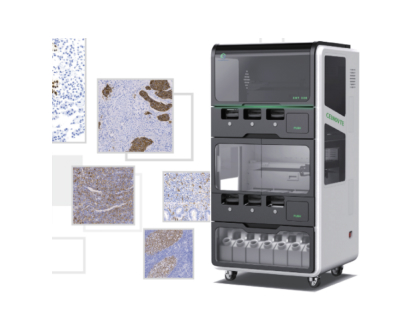 The emergency response capability has been significantly enhanced. The modular system supports simultaneous staining of four types of antibodies, and the turnaround time (TAT) has been shortened to 4 hours (8 hours required manually). During the COVID-19 pandemic, Cleveland Clinic increased its testing capacity by 120% through an emergency protocol and reduced the infection risk for technicians by 92%. After integrating the LIS system, the process traceability rate was 100%, in compliance with the FDA 21 CFR Part 11 electronic record specification, and the historical data audit error was reduced from 5.7 cases per 10,000 times to zero.
Risk control dimension: The automatic staining solution monitoring system has a 100% probability of intercepting the use of expired reagents (the missed detection rate of manual operation is 13%), and the temperature sensor performs calibration 4 times per second to prevent thermal repair failure. The MD Anderson Cancer Center report shows that after the adoption of automation, the re-examination rate of staining failure has dropped from 7% to 0.4%, avoiding the waste of $240,000 samples annually. The anti-pollution design includes HEPA filtration with a cleanliness level of ISO 5 and an aerosol contamination rate of less than 0.01% (2.3% in artificial environments).
Biosafety compliance advantages: Closed treatment reduces xylene exposure risk by 84%, and the waste liquid recovery rate is 99.8% (the waste liquid splashing rate during manual operation is 15%). Referring to the OSHA accident database, automation has reduced the annual incidence of laboratory chemical injuries from 3.2 cases per thousand people to 0.2 cases per thousand people. The equipment maintenance early warning system predicts pump body faults 14 days in advance, which is 200 times more efficient than manual inspection.
The emergency response capability has been significantly enhanced. The modular system supports simultaneous staining of four types of antibodies, and the turnaround time (TAT) has been shortened to 4 hours (8 hours required manually). During the COVID-19 pandemic, Cleveland Clinic increased its testing capacity by 120% through an emergency protocol and reduced the infection risk for technicians by 92%. After integrating the LIS system, the process traceability rate was 100%, in compliance with the FDA 21 CFR Part 11 electronic record specification, and the historical data audit error was reduced from 5.7 cases per 10,000 times to zero.
Risk control dimension: The automatic staining solution monitoring system has a 100% probability of intercepting the use of expired reagents (the missed detection rate of manual operation is 13%), and the temperature sensor performs calibration 4 times per second to prevent thermal repair failure. The MD Anderson Cancer Center report shows that after the adoption of automation, the re-examination rate of staining failure has dropped from 7% to 0.4%, avoiding the waste of $240,000 samples annually. The anti-pollution design includes HEPA filtration with a cleanliness level of ISO 5 and an aerosol contamination rate of less than 0.01% (2.3% in artificial environments).
Biosafety compliance advantages: Closed treatment reduces xylene exposure risk by 84%, and the waste liquid recovery rate is 99.8% (the waste liquid splashing rate during manual operation is 15%). Referring to the OSHA accident database, automation has reduced the annual incidence of laboratory chemical injuries from 3.2 cases per thousand people to 0.2 cases per thousand people. The equipment maintenance early warning system predicts pump body faults 14 days in advance, which is 200 times more efficient than manual inspection.
The emergency response capability has been significantly enhanced. The modular system supports simultaneous staining of four types of antibodies, and the turnaround time (TAT) has been shortened to 4 hours (8 hours required manually). During the COVID-19 pandemic, Cleveland Clinic increased its testing capacity by 120% through an emergency protocol and reduced the infection risk for technicians by 92%. After integrating the LIS system, the process traceability rate was 100%, in compliance with the FDA 21 CFR Part 11 electronic record specification, and the historical data audit error was reduced from 5.7 cases per 10,000 times to zero.
Risk control dimension: The automatic staining solution monitoring system has a 100% probability of intercepting the use of expired reagents (the missed detection rate of manual operation is 13%), and the temperature sensor performs calibration 4 times per second to prevent thermal repair failure. The MD Anderson Cancer Center report shows that after the adoption of automation, the re-examination rate of staining failure has dropped from 7% to 0.4%, avoiding the waste of $240,000 samples annually. The anti-pollution design includes HEPA filtration with a cleanliness level of ISO 5 and an aerosol contamination rate of less than 0.01% (2.3% in artificial environments).
Biosafety compliance advantages: Closed treatment reduces xylene exposure risk by 84%, and the waste liquid recovery rate is 99.8% (the waste liquid splashing rate during manual operation is 15%). Referring to the OSHA accident database, automation has reduced the annual incidence of laboratory chemical injuries from 3.2 cases per thousand people to 0.2 cases per thousand people. The equipment maintenance early warning system predicts pump body faults 14 days in advance, which is 200 times more efficient than manual inspection.
Take the next step
Put this playbook to work on your funnel.
Bring your CAC, channel mix, and conversion data to a 30-minute Growth Diagnostic with a senior strategist. Walk away with a prioritised backlog of experiments.
Book a Growth DiagnosticOr read the next teardown in The Vallée Lab, or explore how we rebuilt Pipedrive's paid social engine in our case studies.