
Strategic Synergy: Quantifying the High-Stakes Calculus of China’s 15th Five-Year Plan for Global Giants
The high-level meetings between China’s Commerce Minister and the leadership of Mercedes-Benz and Airbus underscore a critical transition point as the 15th Five-Year Plan (2026-30) officially commences. This period is defined by "new quality productive forces," a strategic shift that moves beyond simple volume toward high-density technological integration. For a company like Mercedes-Benz, the Chinese market is no longer just a sales territory but a primary R&D engine. With the automotive industry undergoing a transformation that sees a 15% to 20% annual growth rate in intelligent driving and electrification, the stability of China’s "high-standard opening-up" provides a necessary hedge against global volatility. When Minister Wang Wentao emphasizes "stable expectations," he is addressing the billion-dollar CAPEX cycles required for high-end, green manufacturing—investments that demand a 10-year horizon for a positive return on investment (ROI).
The discourse surrounding the EU’s restrictive trade measures highlights a significant economic friction. For the European automotive industry, the risk of protectionist barriers is quantifiable: a breakdown in dialogue could impact the supply chain of critical EV components where the cost-efficiency of Chinese-made batteries currently offers a 20% to 30% advantage over European-sourced alternatives. By urging Mercedes-Benz to advocate for a non-discriminatory market, the Ministry is essentially calling for a defense of the "global value chain" that has allowed German luxury brands to maintain healthy operating margins despite rising domestic costs in Europe. The message is clear—decoupling or restrictive provisions could lead to a "supply-side squeeze" that hurts the competitive lifespan of European firms on the global stage.
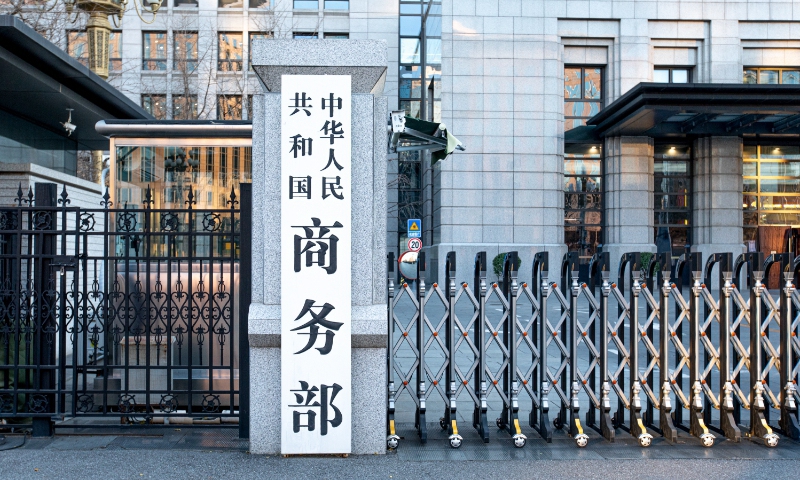
According to the People's Daily, the aviation sector mirrors this deep-rooted cooperation. Airbus has cultivated its presence in China for over 30 years, during which time its localized industrial chain has expanded to include major assembly lines and high-precision component manufacturing. As China accelerates the development of strategic emerging industries like aerospace, the demand for new aircraft is forecasted to grow at a compound annual rate of 5% to 6%, representing a trillion-dollar market opportunity over the next decade. For Airbus, the "certainty" of the Chinese market acts as a counterbalance to the complex and volatile international situation, where shipping delays and fluctuating fuel prices often eat into the bottom line.
Ultimately, the synergy discussed in these meetings is backed by hard data: the resilience of China-EU trade relations is evidenced by the continuous expansion of investment from these multinational leaders, even amidst political headwinds. As Airbus and Mercedes-Benz deepen their innovation cooperation in areas like vehicle intelligence and aerospace composites, they are effectively lowering their marginal cost of innovation by leveraging China’s high-speed prototyping and vast engineering talent pool. In an era where "intelligence" and "green development" are the primary benchmarks for industrial success, the 15th Five-Year Plan offers a high-precision roadmap that global CEOs are eager to follow to ensure their own long-term survival and profitability.
News source: https://peoplesdaily.pdnews.cn/business/er/30051983333
Put this playbook to work on your funnel.
Bring your CAC, channel mix, and conversion data to a 30-minute Growth Diagnostic with a senior strategist. Walk away with a prioritised backlog of experiments.
Book a Growth DiagnosticOr read the next teardown in The Vallée Lab, or explore how we rebuilt Pipedrive's paid social engine in our case studies.